
פרוכות לארון קודש
Parochet Dugma Beit HaMikdash (פרוכת דגם בית המקדש): A Guide to the Temple-Pattern Ark Curtain
Discover what a פרוכת דגם בית המקדש is, the Temple motifs it features, and how to choose the right design for your Aron Kodesh.
מערכת ארגמן · 16 בנובמבר 2026 · 5 דק׳ קריאה
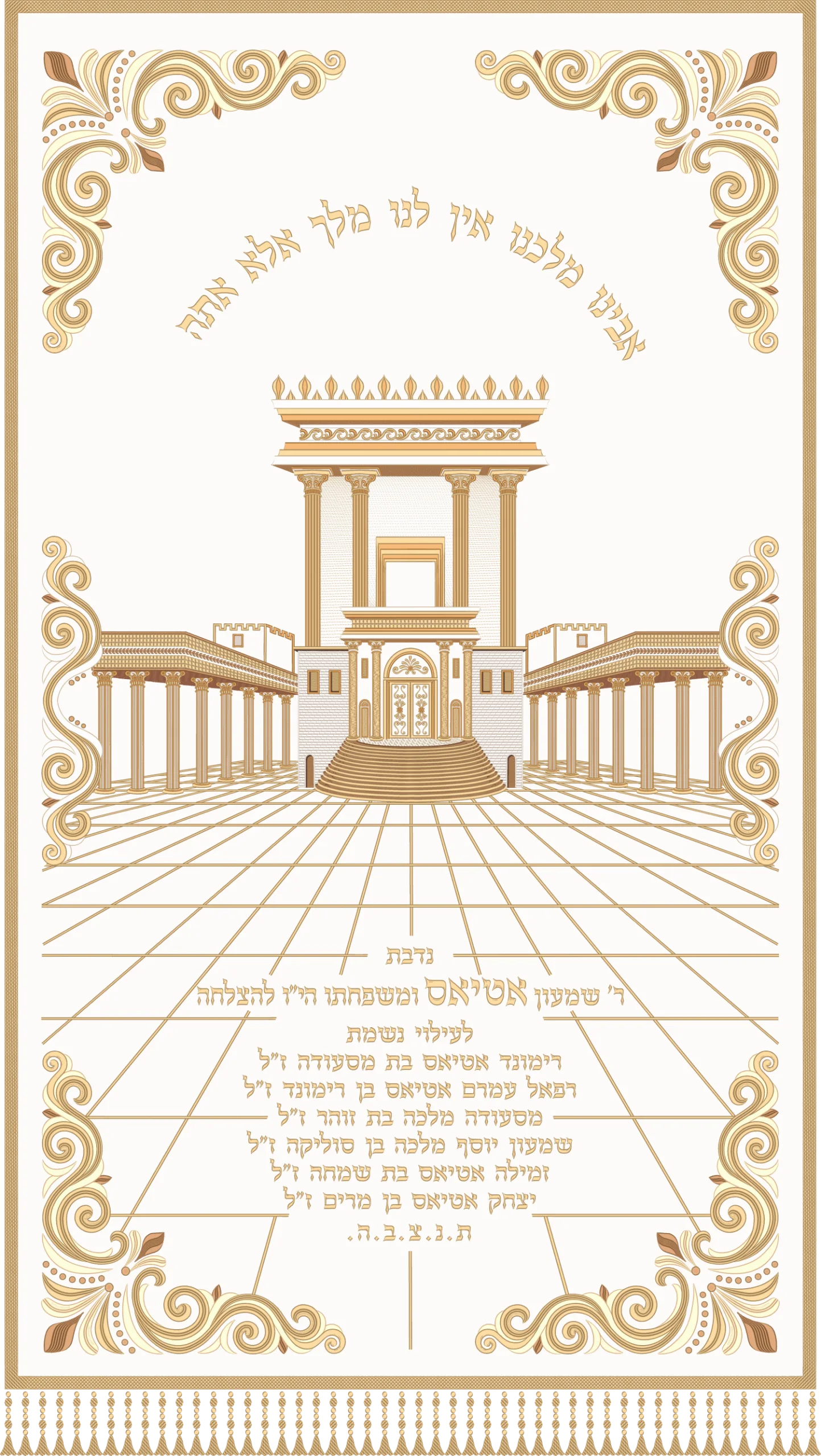
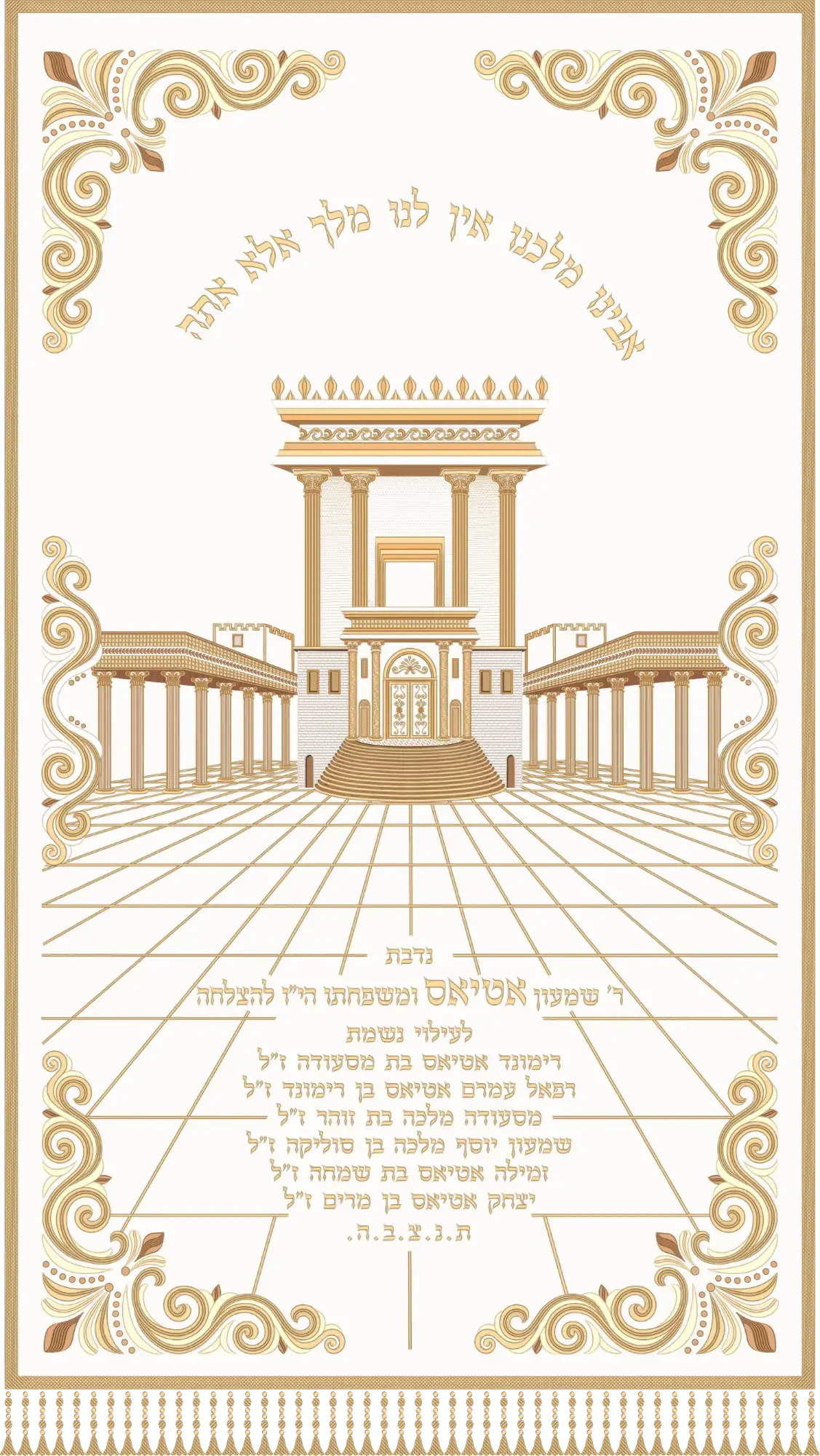
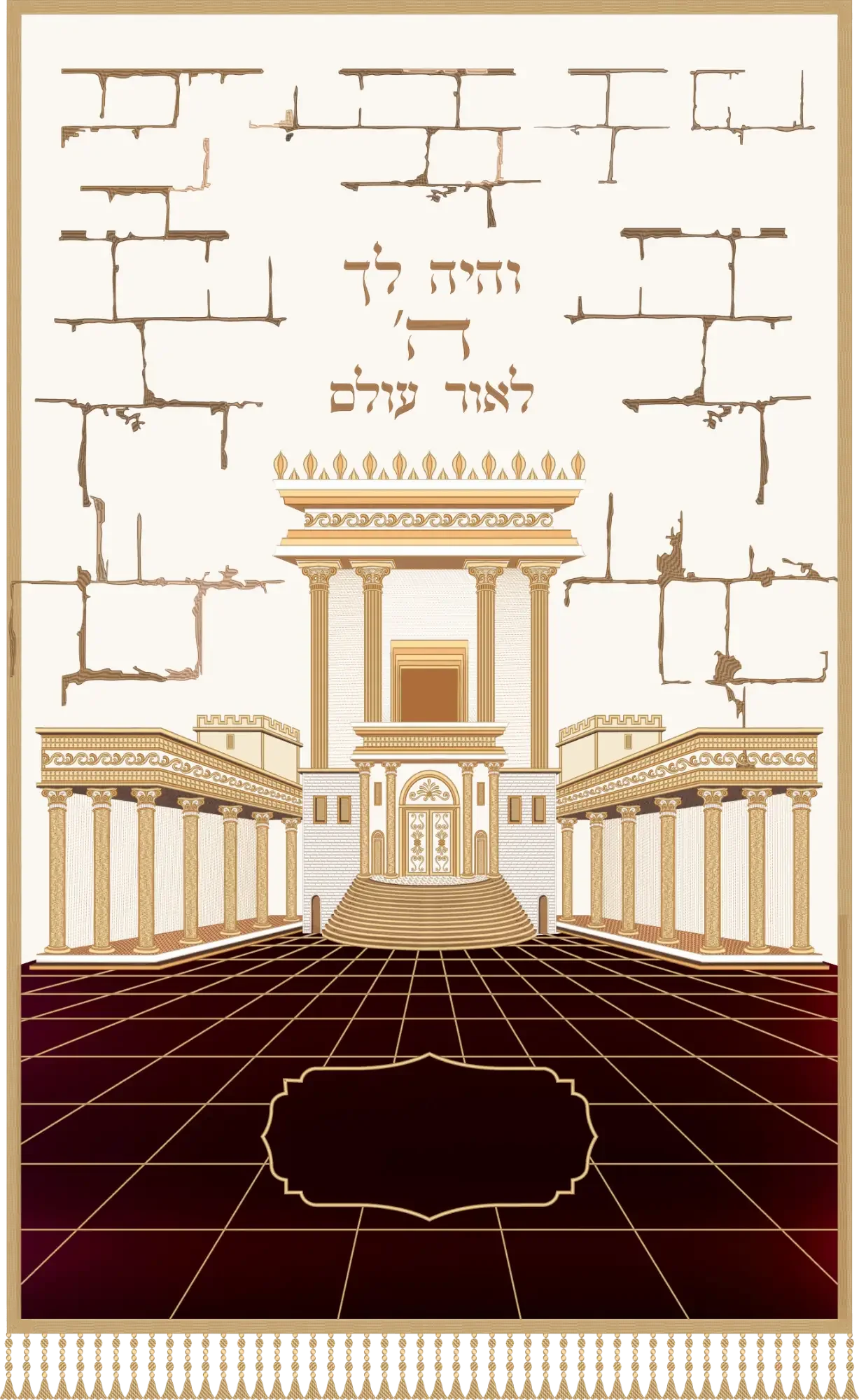
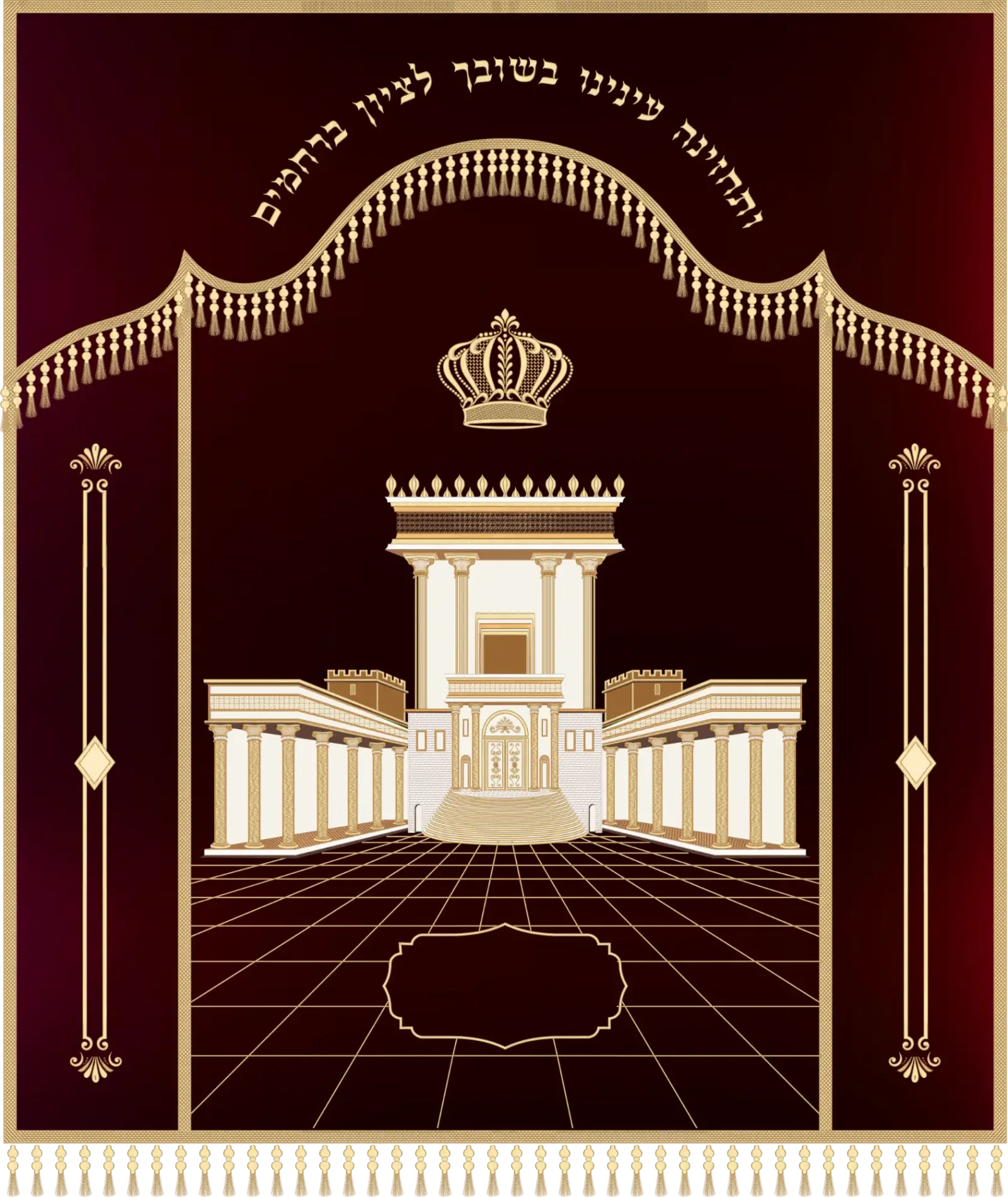
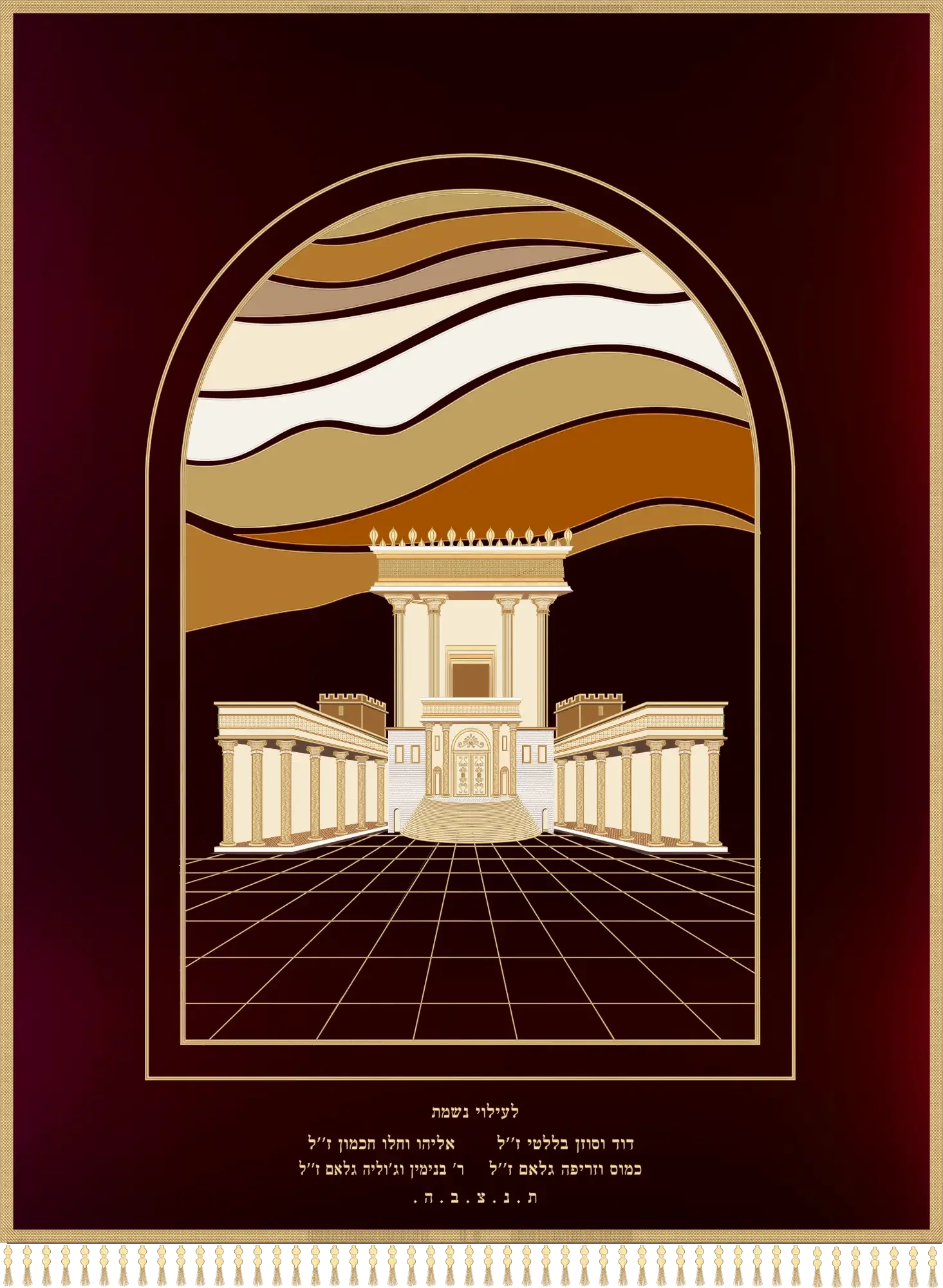
A פרוכת דגם בית המקדש is an ark curtain embroidered with imagery of the Holy Temple – the menorah, the Temple gate, stone columns, or the hills of Jerusalem – rather than plain text or a purely geometric pattern. Congregations and families choose this design so that the Aron Kodesh visually echoes the Beit HaMikdash and the ongoing hope for its rebuilding. Because the imagery is so recognizable, this style of curtain often becomes the focal point of the entire sanctuary.
In Brief
- A פרוכת דגם בית המקדש is an ark curtain whose embroidery depicts elements of the Holy Temple, such as the menorah, the Temple gate, columns, or a Jerusalem landscape.
- This design is chosen by congregations who want the Aron Kodesh to visually recall the Beit HaMikdash and the daily hope for its return.
- Common motifs include the seven-branched menorah, the Tablets of the Covenant, Temple columns, and stylized depictions of Jerusalem.
- The same core design can be adapted in different fabrics, color palettes, and levels of embroidery detail to suit a small shtiebel or a grand sanctuary.
What Is a פרוכת דגם בית המקדש?
A פרוכת דגם בית המקדש is an ark curtain designed around the architecture and sacred vessels of the Holy Temple rather than around a verse, a family crest, or an abstract pattern. The embroidery typically draws on what is known about the Second Temple and earlier eras – its gates, its courtyards, and its vessels – translated into thread, fabric, and sometimes gold- or silver-toned accents. Hand embroidery allows a workshop to render fine architectural detail, from column capitals to the curve of a gate, in a way that machine work rarely matches.
Common Motifs in This Temple-Inspired Design
Several recurring motifs appear across Temple-pattern curtains, and each one carries its own layer of meaning beyond pure decoration.
- The menorah – the seven-branched lamp that stood in the Temple is one of the most recognizable Jewish symbols; the Temple menorah is a natural centerpiece for this design.
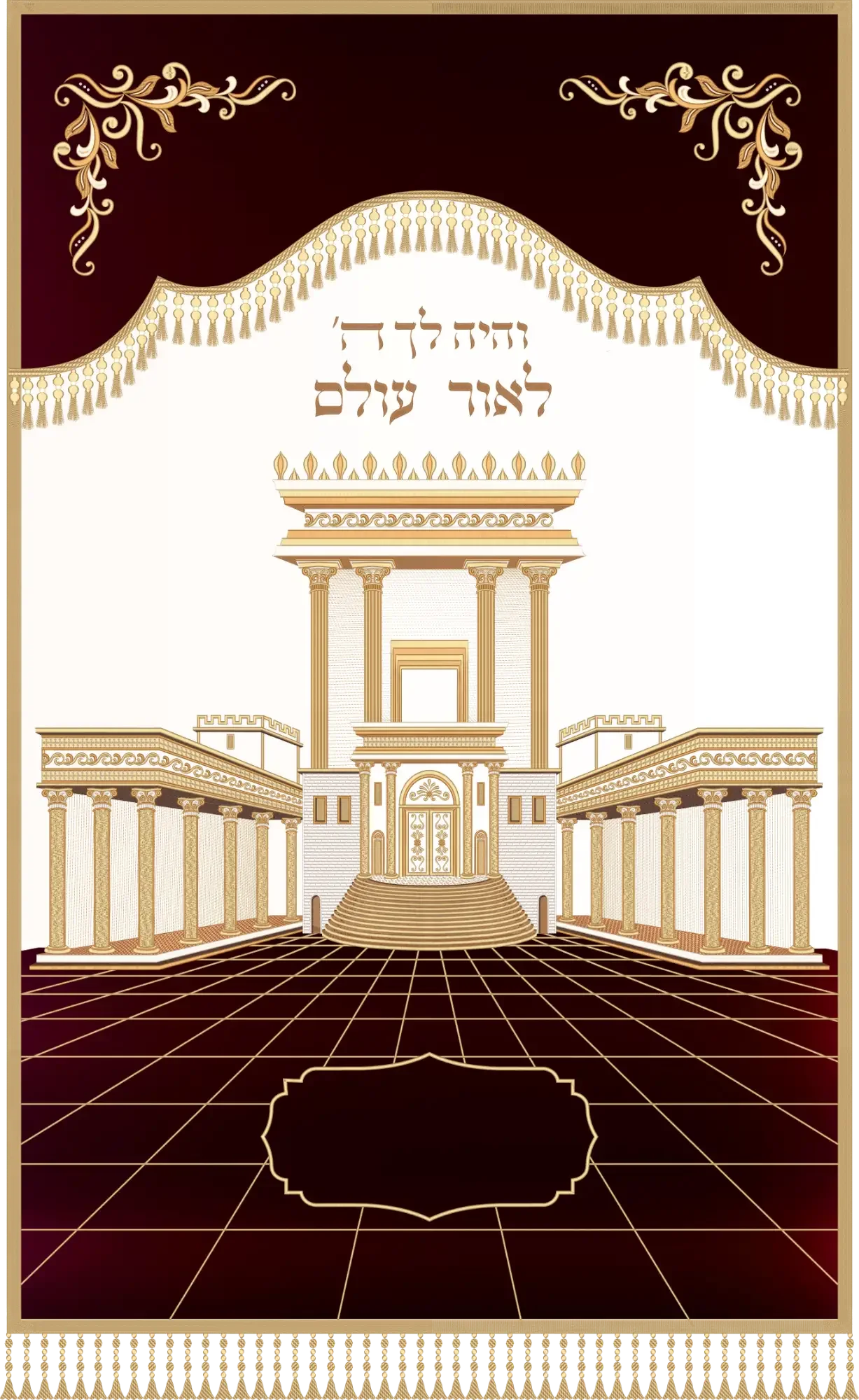
- Temple gates and columns – stylized architecture that frames the curtain, as seen in a Parochet Beit Mikdash Mefoar design.
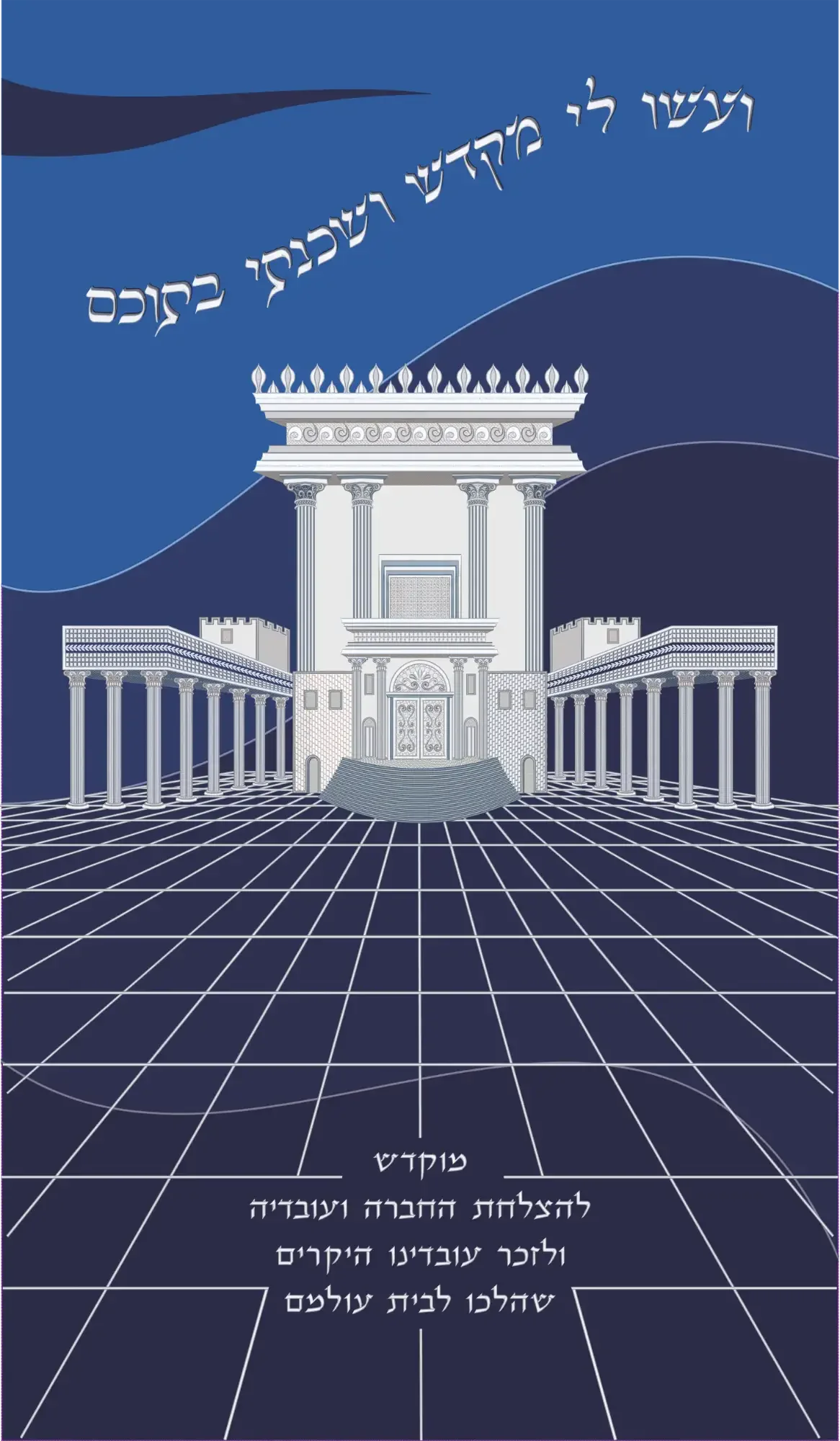
- Jerusalem's landscape – hills, walls, or a sunset skyline placed behind the Temple structure, as in a Parochet Beit Mikdash set against a sunset.
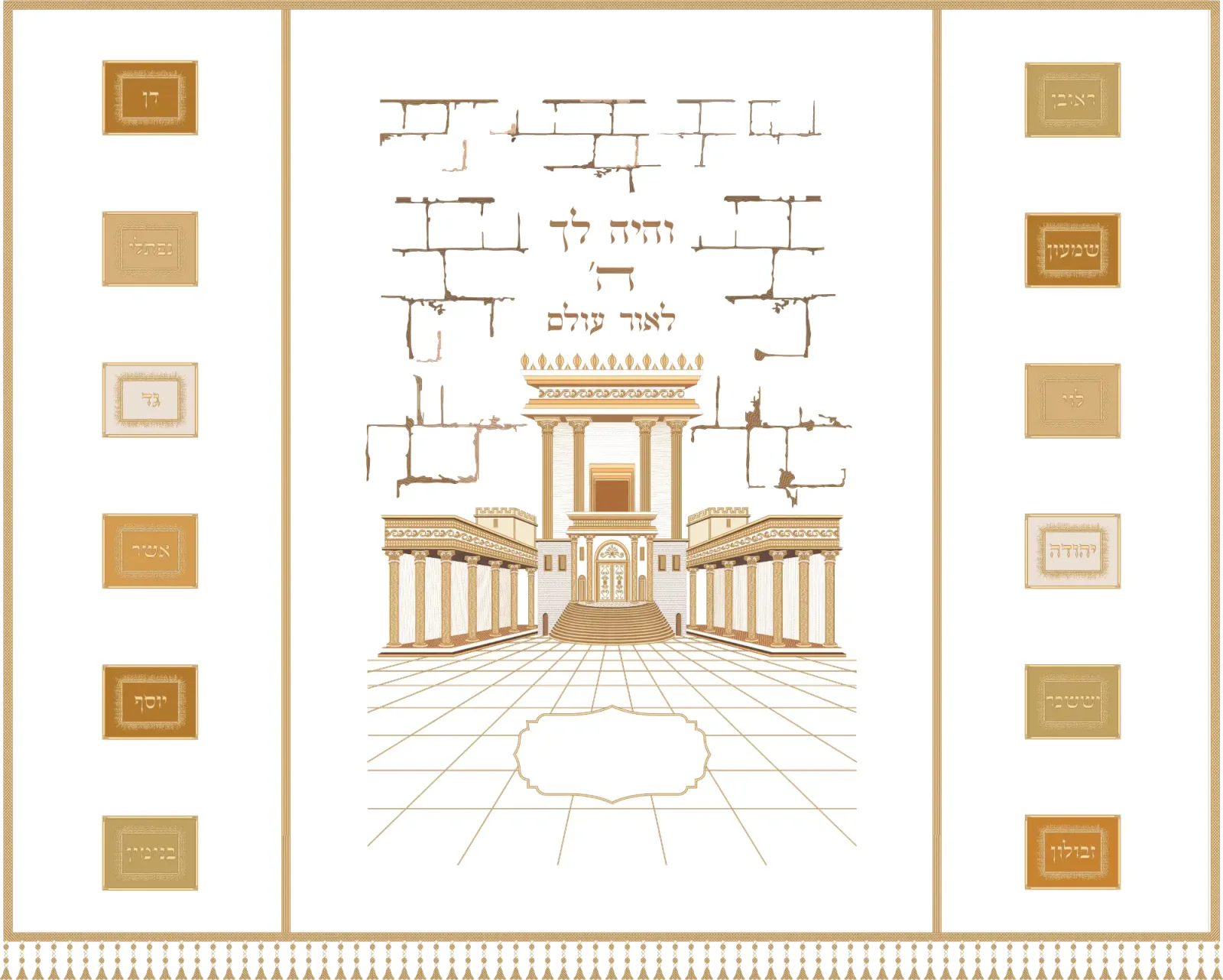
- The Twelve Tribes – some designs combine the Temple motif with the tribal emblems, as in a Parochet Beit Mikdash with the Tribes.
Where a Temple-Pattern Ark Curtain Fits
A Temple-pattern parochet fits any sanctuary that wants a direct visual connection to the Beit HaMikdash, not only occasions tied to mourning or longing for Jerusalem. Many congregations hang it as their everyday curtain so the imagery is present at every prayer, while others reserve it for the Three Weeks leading up to Tisha B'Av or for Yom Kippur, when thoughts turn more intensely toward the Temple and its service. A new synagogue dedicating its Aron Kodesh, or a family sponsoring a curtain in memory of a relative, often gravitates toward this design precisely because it carries that extra layer of meaning. It can also work well alongside other Temple-themed pieces in the room, from signage to Torah ornaments, so the whole sanctuary tells a consistent visual story.
Comparing Motif Emphasis
The table below outlines how different motif choices within a פרוכת דגם בית המקדש shift the visual emphasis of the finished curtain.
| Motif Focus | Visual Emphasis | Typical Setting |
|---|---|---|
| Menorah-centered | A single, bold symbol placed at the center of the curtain | Smaller arks where one strong focal point works best |
| Temple gate and columns | Architectural framing along the curtain's edges | Sanctuaries that want an "entrance" feel to the Aron Kodesh |
| Jerusalem landscape backdrop | Depth and scenery behind the Temple structure | Larger curtains with room for layered embroidery |
| Tribes combined with Temple | Multiple panels or borders alongside the central motif | Communities that want to reflect the whole people of Israel |
Working With an Embroidery Workshop
Because a פרוכת דגם בית המקדש relies on fine architectural and symbolic detail, the skill of the embroiderer matters as much as the design itself. Hichala (היכלא) hand-embroiders ark curtains around these Temple themes, working with congregations on the motifs, colors, and proportions that fit their specific Aron Kodesh. Browsing our gallery of parochot is a useful way to see how the same Temple motifs look across different fabrics and color combinations before settling on one for your own sanctuary.
Frequently Asked Questions
What is the difference between a פרוכת דגם בית המקדש and a regular ark curtain?
A regular ark curtain can carry any design – a verse, a family crest, or a geometric pattern – while a פרוכת דגם בית המקדש specifically depicts elements of the Holy Temple, such as the menorah, gates, columns, or Jerusalem scenery.
Can a Temple-pattern parochet include a dedication inscription?
Yes, most workshops can add a dedication line in memory of or in honor of a person alongside the Temple imagery, usually embroidered along the border or beneath the main design.
Is this design meant only for Tisha B'Av or the Three Weeks?
No, many congregations use a Temple-pattern curtain year-round as their regular Aron Kodesh covering, while others choose to display it specifically during the Three Weeks or on Yom Kippur.
Conclusion
A פרוכת דגם בית המקדש turns the Aron Kodesh into more than a cover for the Torah scrolls – it becomes a daily, visual reminder of the Beit HaMikdash and the hope that surrounds it. Whether a congregation leans toward a menorah-centered design, a gate-and-column frame, or a full Jerusalem landscape, the choice of motif lets each community express that connection in its own way.
עוד מהעולם של ארגמן
פרוכות לארון קודש
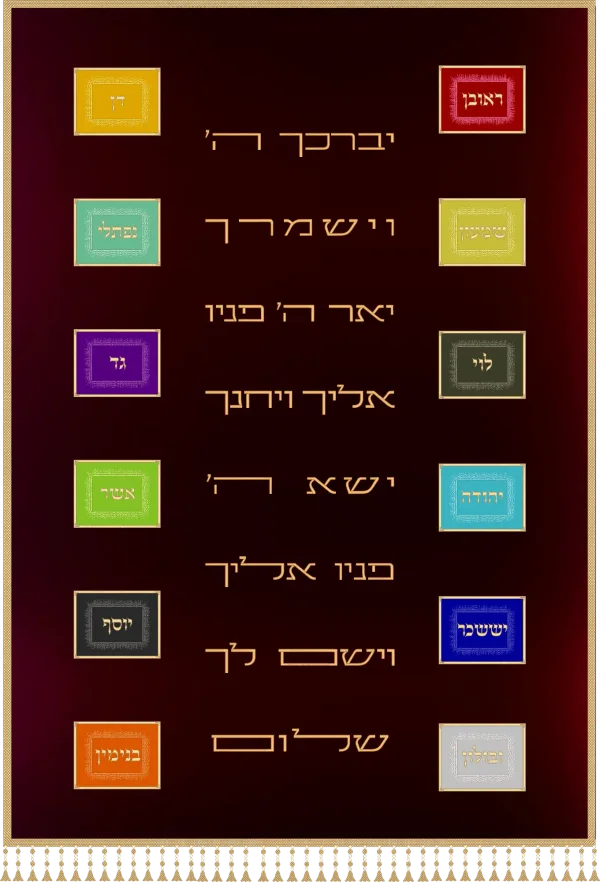
Parochet Shvatim (פרוכת שבטים): The Ark Curtain That Unites the Twelve Tribes of Israel
פרוכת שבטים curtains embroider the Twelve Tribes of Israel, bringing unity, heritage, and beauty to the synagogue's aron kodesh.
פרוכות לארון קודש
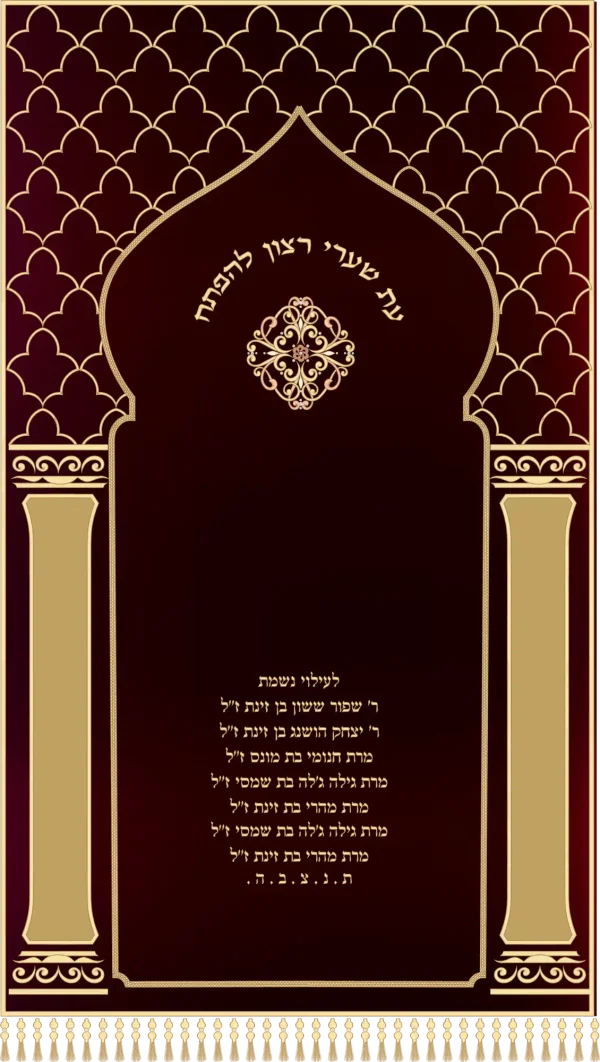
Parochet LeChagim (פרוכת לחגים): The Tradition of Festival Ark Curtains
A look at the parochet lechagim tradition - festival ark curtains that mark the Jewish holidays with fitting color and design.
פרוכות לארון קודש
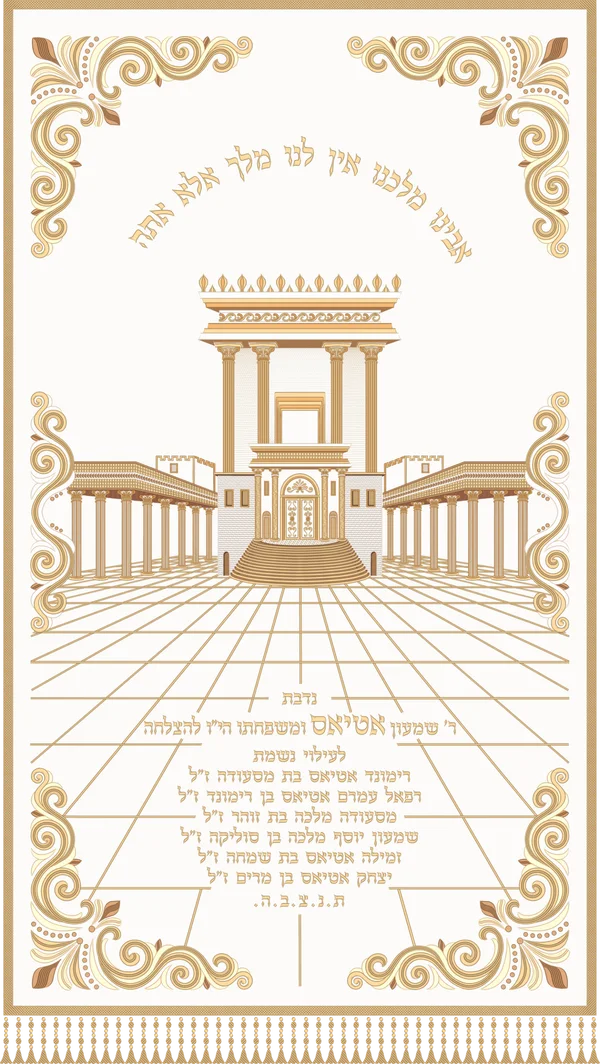
Parochet Beit HaMikdash (פרוכת בית המקדש): The Ark Curtain That Evokes the Holy Temple
Discover what a parochet beit hamikdash depicts, why congregations choose it, and how to pick the right Temple-themed ark curtain.